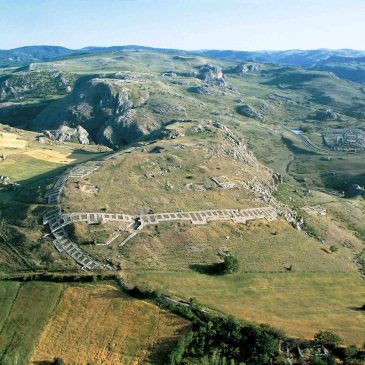
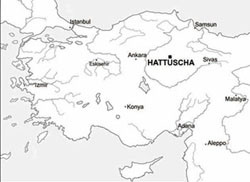
Hattuscha liegt beim heutigen Dorf Boğazkale im nördlichen Zentralanatolien, in einer zerklüfteten Landschaft aus Bergrücken und Schluchten, die der Stadt zugleich Schutz und eine eindrucksvolle Lage gab. Lange vor den Hethitern siedelten hier die Hattier, eine einheimische anatolische Bevölkerung, deren Kultur, Gottheiten und Ortsnamen die Zuwanderer übernahmen. Selbst der Name „Hatti“ ist ein hattisches Erbe.
Im 19. Jahrhundert v. Chr. bestand hier eine assyrische Handelsniederlassung, eine Station in einem Netz, dessen Mittelpunkt das nahe Kanesch bildete und das Zinn und Textilien gegen Silber quer durch Anatolien bewegte. Diese Siedlung endete gewaltsam. Ein Herrscher namens Anitta zerstörte die Stadt im 18. Jahrhundert v. Chr. und ließ nach dem Text, der seinen Namen trägt, Unkraut auf ihrem Boden säen und verfluchte jeden, der sie erneut besiedeln würde.
Der Aufstieg der Hethiter
Trotz des Fluchs war die Lage zu wertvoll, um sie aufzugeben. Im 17. Jahrhundert v. Chr. machte der hethitische König Hattuschili I. die Stadt zu seiner Hauptstadt und leitete seinen Königsnamen von ihr ab. In den folgenden Jahrhunderten wurde Hattuscha zum politischen und religiösen Zentrum eines Reiches, das zu einer der Großmächte des Alten Orients heranwuchs. Unter dem Alten Reich zogen hethitische Heere bis nach Syrien, und um 1595 v. Chr. marschierte Mursili I. den Euphrat hinab und plünderte Babylon selbst, ein erstaunlicher Vorstoß, der das Ende der Dynastie Hammurabis mit herbeiführte.
Es folgten Phasen der Instabilität mit Palastintrigen und Gebietsverlusten, die die Könige selbst mit ungewöhnlicher Offenheit festhielten. Erneuert wurde das Reich im 14. Jahrhundert v. Chr. durch Šuppiluliuma I., der die Macht Mitannis in Nordsyrien brach und die Hethiter zur bestimmenden Kraft der Region machte, im Briefwechsel mit den Pharaonen Ägyptens auf Augenhöhe.
Hattuscha als Hauptstadt eines Großreichs
Auf ihrem Höhepunkt stand das Hethiterreich Ägypten und Assyrien gleichrangig gegenüber. Die Auseinandersetzung zwischen dem hethitischen König Muwatalli II. und dem ägyptischen Pharao Ramses II. bei Kadesch um 1274 v. Chr. gehört zu den frühesten Schlachten der Geschichte, zu denen ausführliche Berichte beider Seiten überliefert sind. Sie endete nicht mit einer Eroberung, sondern in einem Patt und rund fünfzehn Jahre später in einem förmlichen Friedensvertrag, einem frühen Meilenstein der zwischenstaatlichen Diplomatie, der später durch eine Heirat zwischen den Königshäusern besiegelt wurde. Tonabschriften des Vertrags lagen in den Archiven von Hattuscha; eine Nachbildung ist heute im Hauptquartier der Vereinten Nationen in New York zu sehen.
Die Stadt wuchs mit ihrem Reich. Von der älteren Unterstadt rund um den Großen Tempel dehnte sich Hattuscha im 13. Jahrhundert v. Chr. nach Süden in eine weitläufige Oberstadt aus, dicht besetzt mit Heiligtümern, bis das befestigte Areal etwa 1,8 Quadratkilometer umfasste. Seine Mauern, Tore und Monumente lassen sich bis heute ablaufen, vom Löwentor bis zum großen Wall von Yerkapı.
Die Tontafeln, die ein Reich zurückbrachten
Bemerkenswert sind die Hethiter für das, was sie aufschrieben. Mehr als 30.000 Tontafeln und Fragmente in Keilschrift, aufbewahrt in Palast- und Tempelarchiven, überliefern Verträge, Gesetze, Briefe, Rituale und Mythen. Sie halten das Hethitische neben dem Hattischen, Hurritischen, Luwischen und Akkadischen fest, den Arbeitssprachen eines wirklich vielsprachigen Hofes. Als der tschechische Gelehrte Bedřich Hrozný 1915 nachwies, dass das Hethitische zur indogermanischen Sprachfamilie gehört, wurde es zu deren ältestem bezeugten Mitglied, verwandt mit Griechisch, Latein und Deutsch. Diesen Archiven ist es zu verdanken, dass die Hethiter, lange nur als Name in der hebräischen Bibel und in ägyptischen Quellen bekannt, im 20. Jahrhundert in die Geschichte zurückkehren konnten.
Untergang und Nachleben
Der Niedergang kam rasch. Um 1200 v. Chr., inmitten der größeren Umwälzungen am Ende der Bronzezeit im östlichen Mittelmeerraum, wurde Hattuscha aufgegeben und brannte nieder. Über die Ursachen wird bis heute gestritten: Druck wandernder Bevölkerungen, innere Spannungen, Dürre und Missernten sowie das Zerreißen der Handelsnetze, von denen die Palastwirtschaft abhing, dürften alle eine Rolle gespielt haben. Klar ist, dass die große Hauptstadt weniger von einer einzigen Katastrophe überrollt als vielmehr geräumt und dann zerstört wurde; ihre wertvollsten Bestände waren offenbar zuvor fortgeschafft worden.
Ganz leer blieb der Platz nicht. Eisenzeitliche Dorfbewohner und später eine phrygische Siedlung auf den Höhen von Büyükkaya nutzten Teile der Ruinen, doch die Erinnerung an die hethitische Hauptstadt verschwand vollständig. Rund dreitausend Jahre lang wusste niemand, wessen Stadt dies gewesen war.
Die Wiederentdeckung einer verlorenen Geschichte
1834 erreichte der französische Reisende Charles Texier Boğazköy, zeichnete Tore und Mauern und veröffentlichte den ersten Bericht über die Ruinen, ohne zu erkennen, was er gefunden hatte. Der entscheidende Nachweis gelang 1906, als Ausgräber die königlichen Archive freilegten und darin die Verträge und die Korrespondenz der Könige von Hatti lasen. Die namenlose Ruine war Hattuscha. Nur wenige Identifizierungen in der Archäologie haben ein ganzes Kapitel der alten Geschichte so vollständig wieder aufgeschlagen.
Heute stehen die Ruinen als UNESCO-Welterbe unter Schutz, eingetragen 1986, und die Keilschriftarchive wurden 2001 in das Weltdokumentenerbe der UNESCO aufgenommen. Die laufende Forschung schärft das Bild der Stadt, ihrer Herrscher und ihrer Erbauer beständig nach, vom Felsheiligtum Yazılıkaya bis zur verwitterten Inschrift ihres letzten Königs.