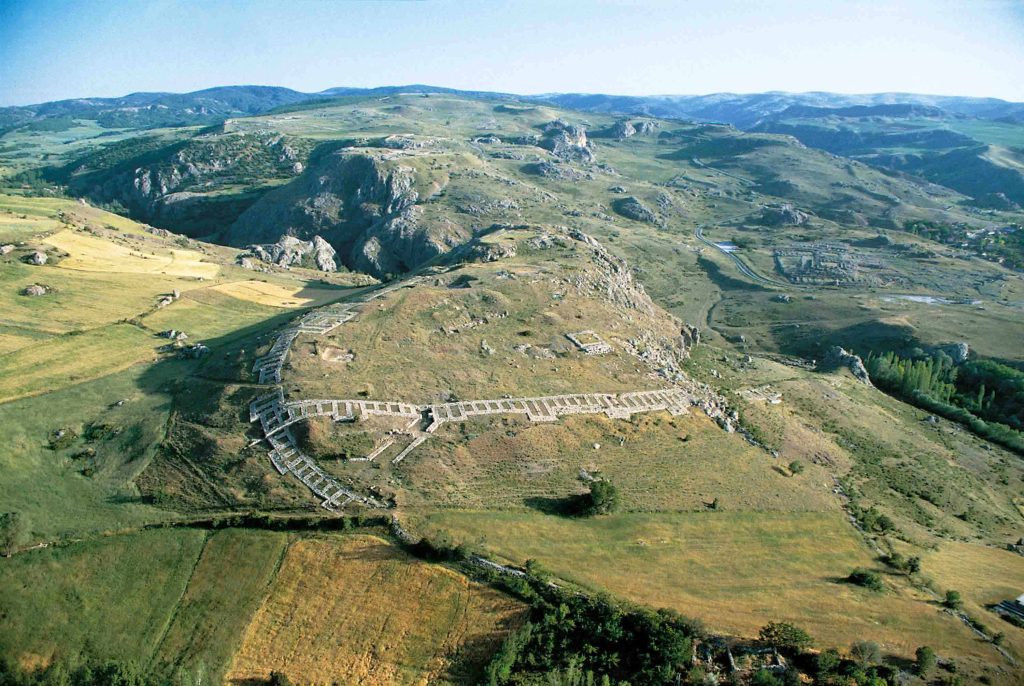
Nur wenige antike Städte lassen sich so vollständig ablaufen wie Hattuscha. Ihre Ruinen erstrecken sich über ein steiles, unregelmäßiges Gelände von rund 1,8 Quadratkilometern, durch Natur und Planung geteilt in eine Unterstadt und eine höher gelegene Oberstadt, umschlossen von kilometerlangen Befestigungen. Ein Rundgang über das Gelände ist praktisch ein Rundgang durch hethitische Stadtplanung, Wehrtechnik und Religion; er ergänzt die Geschichte der Stadt und ihres Reiches, die die Texte erzählen.
Die Mauern
Die Befestigungen zogen sich über mehrere Kilometer entlang der Bergrücken, errichtet auf Steinfundamenten, die mächtige Lehmziegelaufbauten trugen und mit rechteckigen Türmen besetzt waren. Stellenweise war die Mauer doppelt geführt, mit einer niedrigeren Vormauer vor der Hauptlinie, und verborgene Poternen ließen die Verteidiger darunter hindurchgehen. Ein 65 Meter langer Abschnitt in der Unterstadt wurde zwischen 2003 und 2005 wieder aufgebaut, mit traditionellen Materialien auf den originalen Fundamenten. Er vermittelt einen lebendigen Eindruck dessen, was ein herannahender Reisender einst sah: einen steilen Lehmziegelwall, geweißt und von Türmen bekrönt.
Drei große Tore
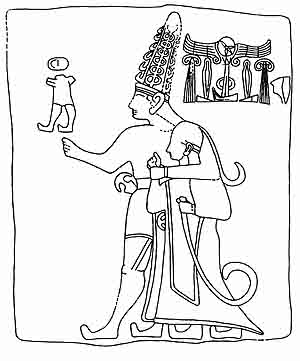
Die einprägsamsten Bauten des Mauerrings sind die Tore der Oberstadt. Das Löwentor im Südwesten wird von zwei Löwen flankiert, die in hohem Relief aus den Torblöcken gearbeitet sind, das Maul geöffnet, seit über dreitausend Jahren als Wächter des Zugangs. Das Königstor im Südosten verdankt seinen modernen Namen einem eindrucksvollen Relief einer bewaffneten Gestalt, die man einst für einen König hielt; tatsächlich handelt es sich um einen Gott, kenntlich an der Hörnerkrone der Göttlichkeit. Das Relief vor Ort ist heute eine Kopie, das Original steht im Museum für Anatolische Zivilisationen in Ankara.
Zwischen diesen beiden Toren, am höchsten Punkt der Stadt, errichteten die Hethiter ihr ehrgeizigstes Bauwerk. Bei Yerkapı wurde ein gewaltiger künstlicher Wall von etwa 250 Metern Länge und 30 Metern Höhe mit glatten Steinplatten verkleidet, und ein 71 Meter langer Kraggewölbetunnel führt geradewegs durch seinen Fuß. Der Tunnel durchmisst noch immer die gesamte Länge des Walls, und Besucher können ihn durchschreiten wie die Menschen der Bronzezeit. Darüber stand das Sphinxtor, benannt nach den Sphingen, die es flankierten. Die Sphingen selbst haben eine bewegte neuere Geschichte: 1917 zur Restaurierung nach Deutschland gebracht, kehrte eine 1924 nach Istanbul zurück, während die andere bis 2011 in Berlin blieb. Beide sind heute im Museum von Boğazkale zu sehen. Der von weit her sichtbare Wall war ebenso sehr Ausdruck königlicher Macht wie militärische Notwendigkeit.
Die Unterstadt und der Große Tempel
Unterhalb, in der älteren Unterstadt, liegen die Fundamente des Großen Tempels, auch Tempel 1 genannt. Dem Wettergott von Hatti und der Sonnengöttin von Arinna geweiht, den beiden Hauptgottheiten des hethitischen Staates, war er das größte Heiligtum der Stadt, umgeben von einem dichten Komplex aus Magazinen, in denen riesige Vorratsgefäße und Tontafelarchive lagerten. Schon der Grundriss vermittelt die Größe der Tempelwirtschaft, die dieses Heiligtum trug. In einem seiner Höfe liegt ein Würfel aus poliertem grünem Stein, einzigartig auf dem Gelände; sein Zweck ist unbekannt, und er bleibt eines der kleinen Rätsel von Hattuscha.
Die Oberstadt von Hattuscha
Die Oberstadt ist von Heiligtümern geprägt. Die Grabungen haben die Fundamente von mehr als zwei Dutzend Tempeln freigelegt, dicht gedrängt im Tempelbezirk, ein Beleg dafür, dass Hattuscha nicht nur Regierungssitz war, sondern ein ausgedehntes Kultzentrum, Heimat der vielen Gottheiten einer bekanntermaßen aufnahmefreudigen Religion. Die Hethiter selbst sprachen von den „tausend Göttern“ ihres Landes.
Nicht alles hier war heilig. Am Hang zwischen Unterstadt und Burg standen große mehrgeschossige Verwaltungsbauten, darunter das sogenannte Haus am Hang, in dem Schreiber arbeiteten und Tafeln aufbewahrt wurden, und Wohnquartiere breiteten sich aus, wo das Gelände es zuließ. Zusammen mit Speichern und Werkstätten erinnern sie daran, dass Hattuscha eine arbeitende Stadt aus Beamten, Priestern, Soldaten und Bauern war und nicht bloß eine Bühne für königliches Zeremoniell.
Zwischen den Tempeln verstreut liegen weitere Wahrzeichen: die befestigten Felshöhen von Sarıkale und Yenicekale, der Felsrücken Nişantepe mit seinem Archiv aus Tonbullen und der großen hieroglyphischen Inschrift von Nişantaş, sowie der Südburg-Komplex, wo eine kraggewölbte Steinkammer neben zwei heiligen Teichen eine hieroglyphische Inschrift Šuppiluliumas II. trägt, eines der letzten hethitischen Könige.
Büyükkale und die Teiche
Über allem thront auf einem beherrschenden Felssporn Büyükkale, die Königsburg. Dies war die Akropolis von Hattuscha: der Palast der Könige, seine Audienzhallen und die zentralen Archive, deren Tafeln das Reich der Geschichte zurückgaben. Ein Viadukt trug einst die Zufahrt über die Schlucht, und von den Terrassen blickten die Herrscher über ihre Hauptstadt. In der Nähe liegen die östlichen und südlichen Teiche, künstliche Becken, die Wasser für die Trockenmonate speicherten, Teil eines Wassermanagements, zu dem auch Dämme in den umliegenden Tälern gehörten.
Von der Burg hinab durch den Tempelbezirk, hinaus durch das Löwentor und an der Mauer entlang bis Yerkapı zu gehen heißt, auf einem Rundweg von wenigen Kilometern das religiöse, politische und militärische Herz der hethitischen Welt nachzuzeichnen. Und der Rundgang muss nicht an der Stadtmauer enden: Ein kurzes Stück nordöstlich liegt Yazılıkaya, das Felsheiligtum von Hattuscha, wo die Götter des Reiches in Stein gehauen sind.